We were recently fortunate enough to have been invited for a trip to Charles Faram’s HQ and some of the local farms in the area. We also visited Hawkins farm, an award winning grower of what I would consider the best Harlequin around. Harlequin is the daughter of Godiva and granddaughter of Jester (one of our favourite hops). Known for its tropical aroma and high oil content, similar to those of the big American varieties.
We also had the opportunity to visit a farm growing UK variants of Willamette (another hop we use in very large quantities) and Hersbrucker (we use it in all our lagers).
With the increasing costs of fuel, hops from other countries are starting to become too expensive for UK brewers, not to mention the higher carbon footprint associated with the long journey from the Pacific North West (USA) or from South Eastern Victoria and Tasmania (Australia).
In recent years the yields and overall quality of the German/Slovenian grown noble hops has seriously gone down. Moreso the yield but if alpha acid content is a marker of quality then that too. Those varieties are used in great amounts by small breweries like ours but also some of the biggest multinational breweries who between them use more than any others. The answer to this is being explored now with varieties like Hersbrucker with acres being planted across Herefordshire, Worcestershire and Kent.
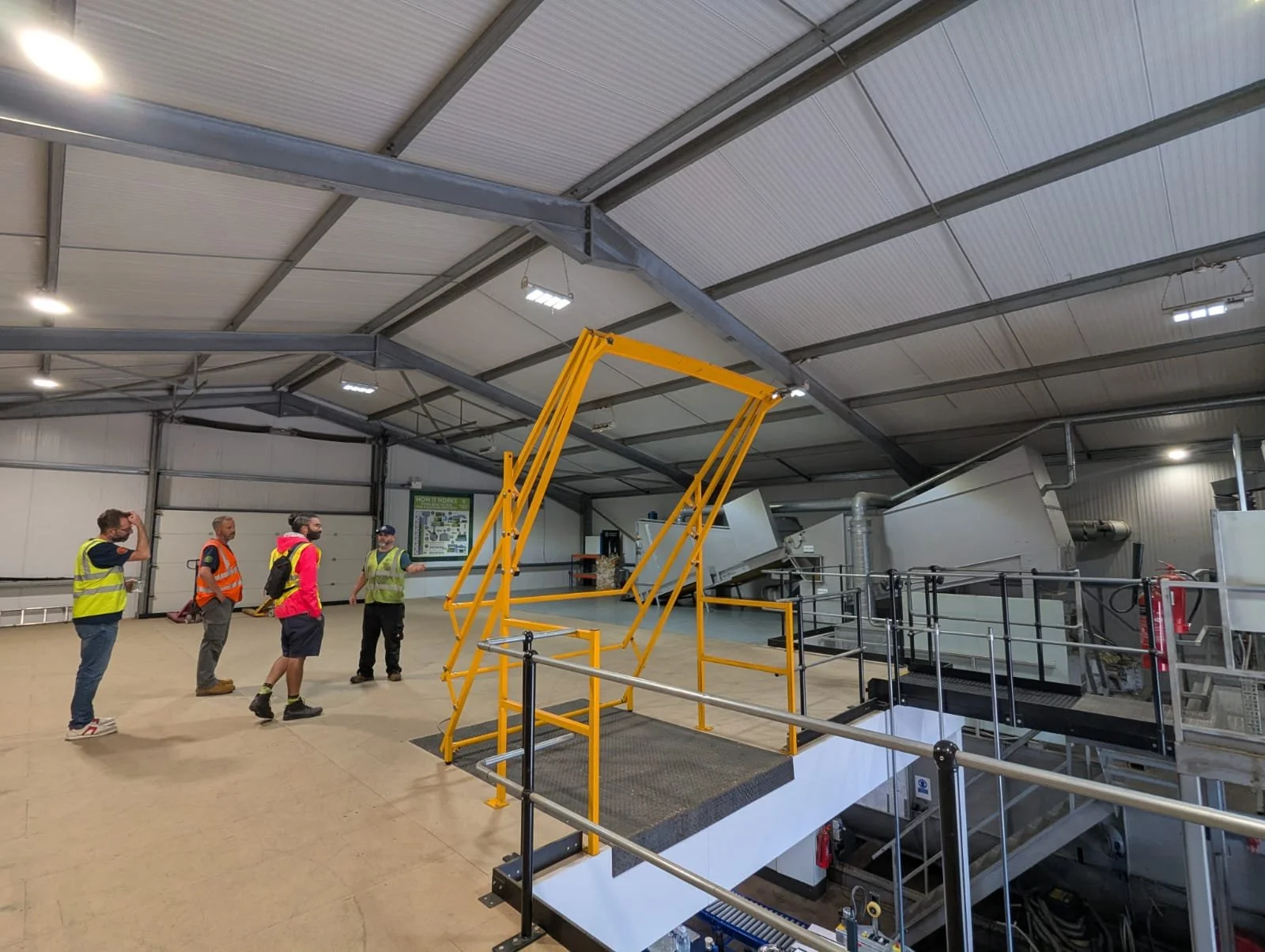
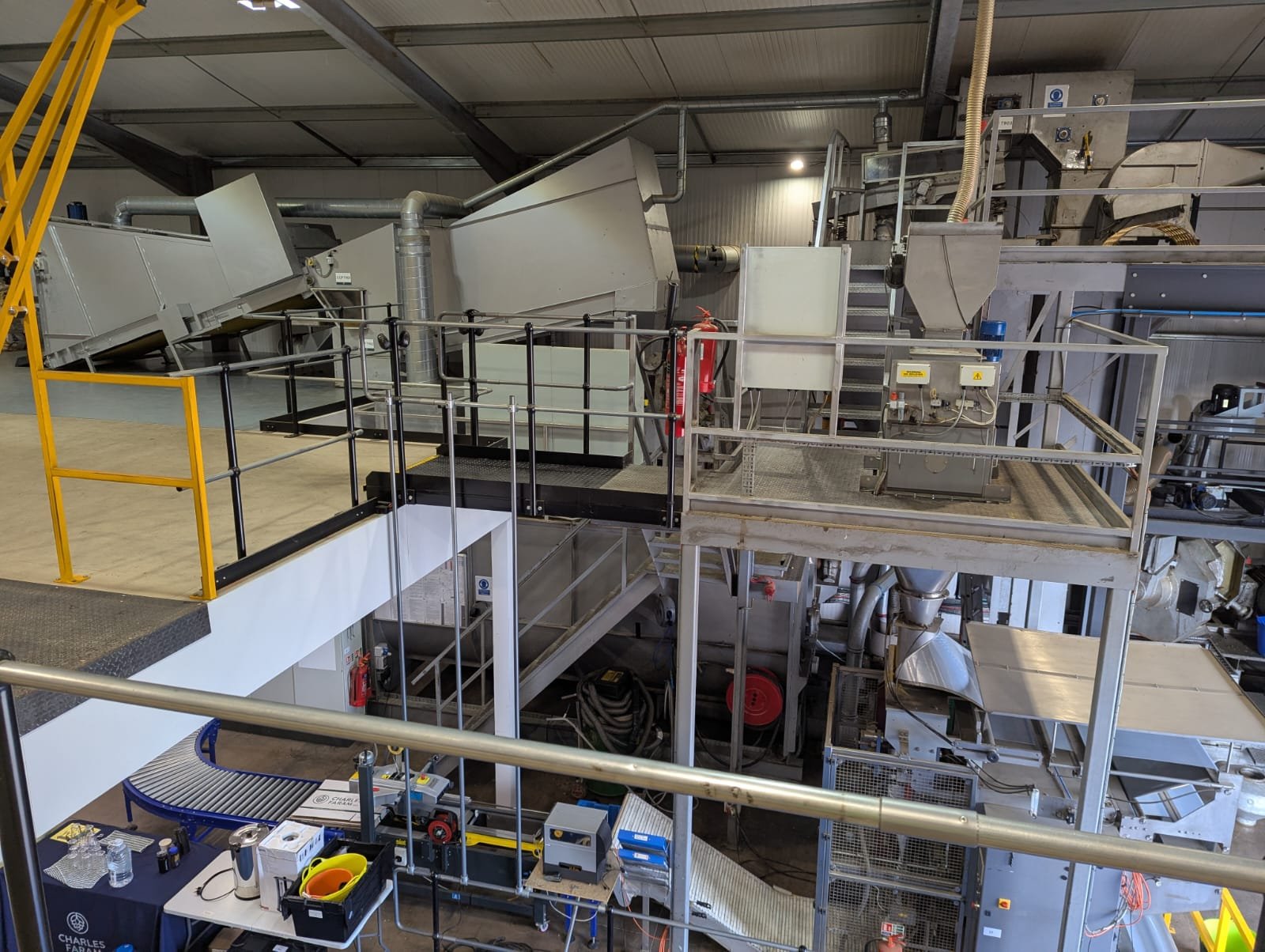
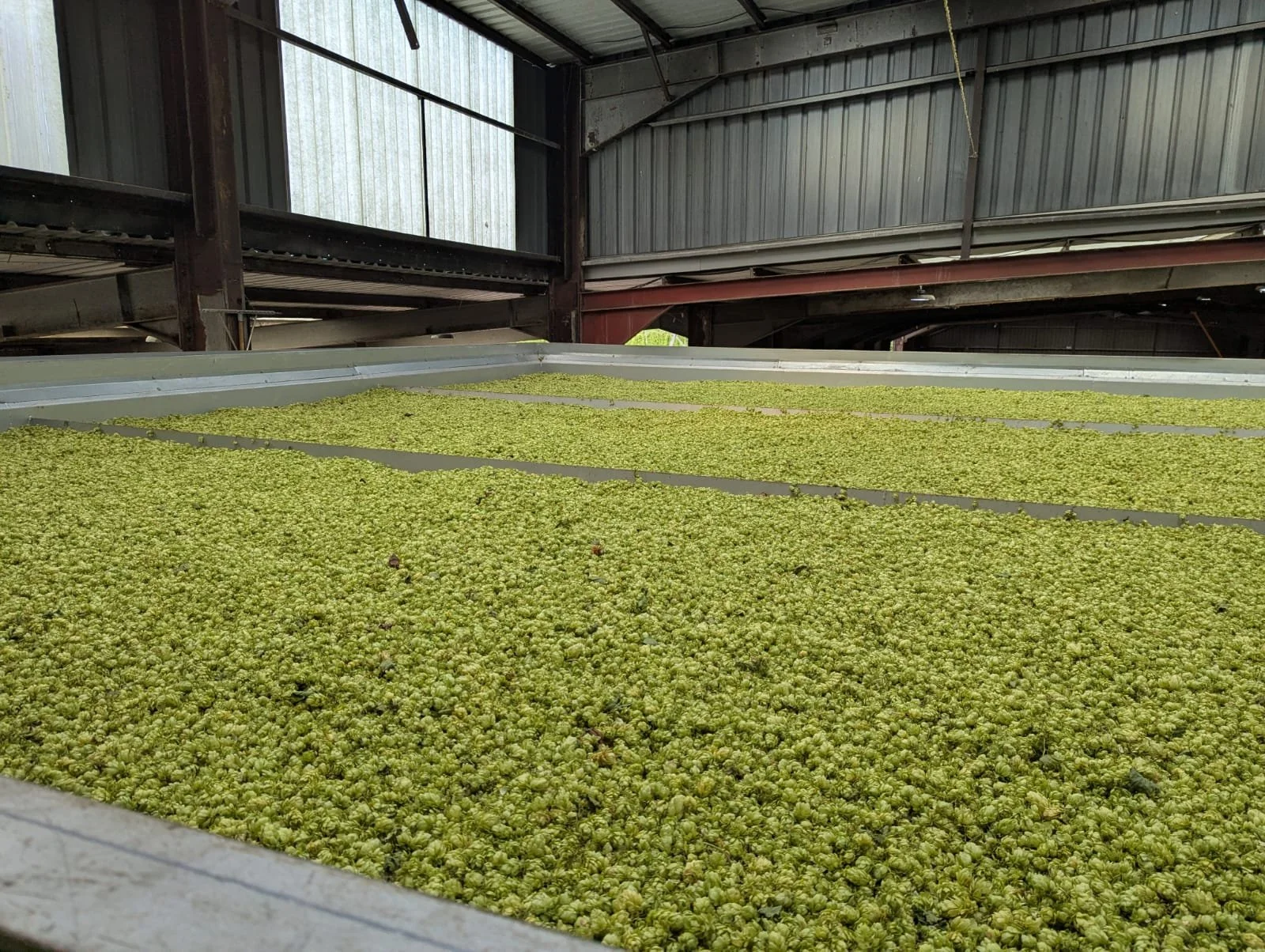
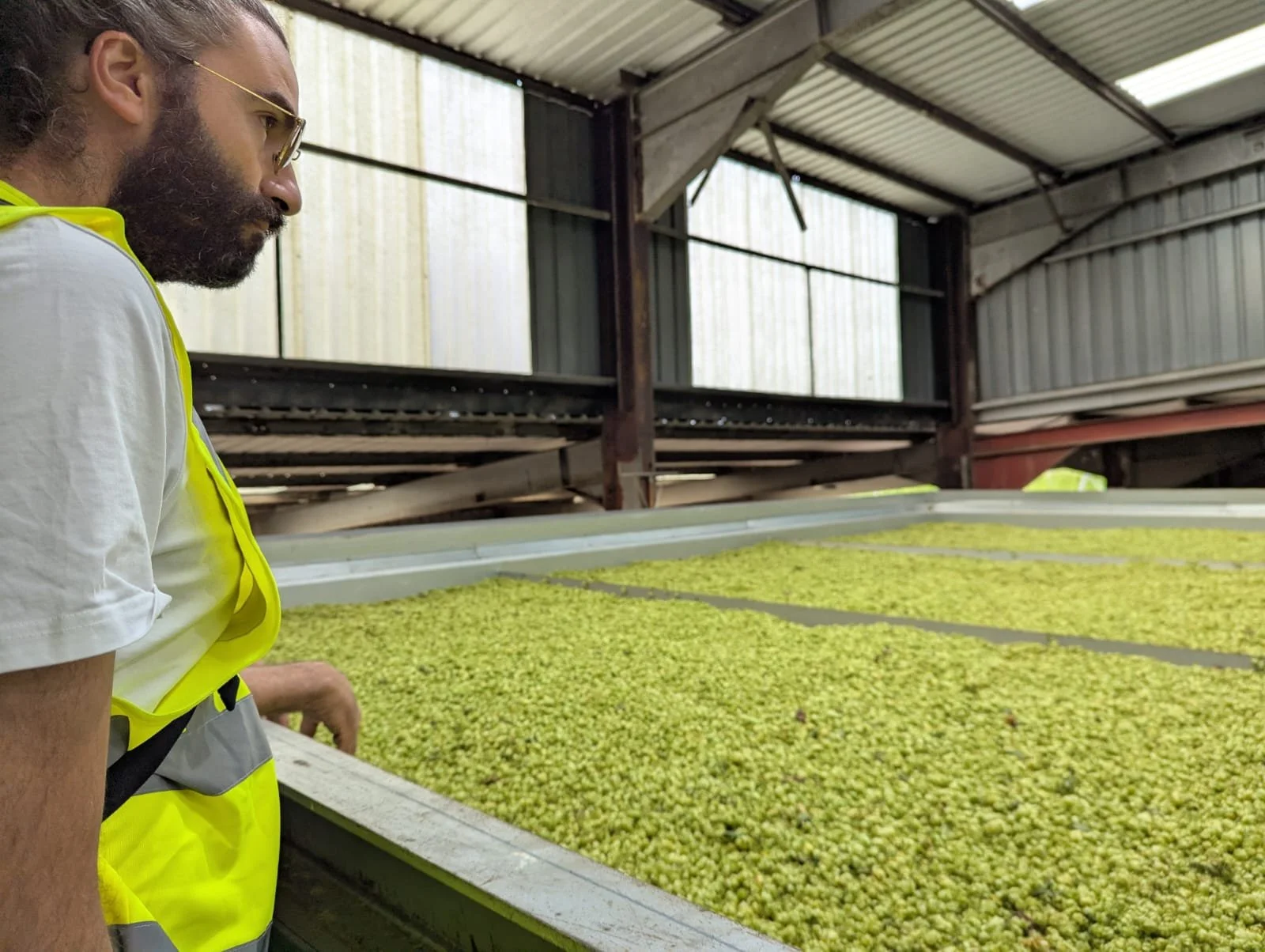
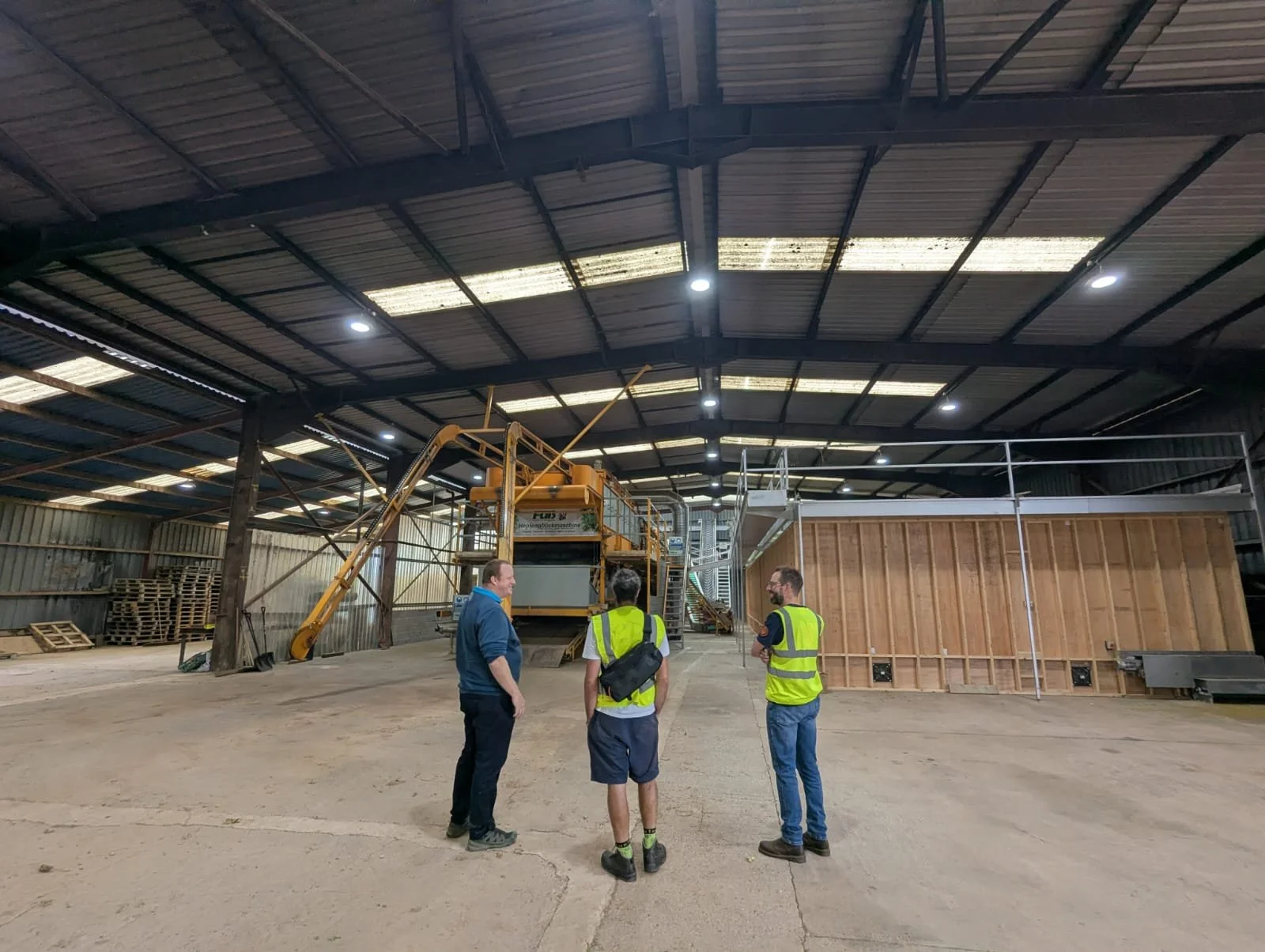
As part of our brief tour of the HQ we got to see the machine that breaks up the freshly baled hops and turns them into T90 pellets, probably the most commonly used processed hop product. There are of course the whole cone (freshpack) and then many different types of pelletised hops. This machine leads to their cylindrical pelletiser. A huge rotating hammer inside a thick drum with precision cut holes that forces the hop material to be extruded through them. The oil content versus the moisture level are crucial at this stage as you need enough for the mush to form into solid pellets but not be too wet and then dry like rock hard little things or the opposite, fall out of the machine as powder. It’s led by Tim and a very skilled and knowledgeable and enthusiastic chap called Jim. The cold store was an absolutely massive warehouse with floor to ceiling racking filled with pallets of packed hops. Some destined for many unnamed breweries. It was a pretty vast place with tons and tons of hops.
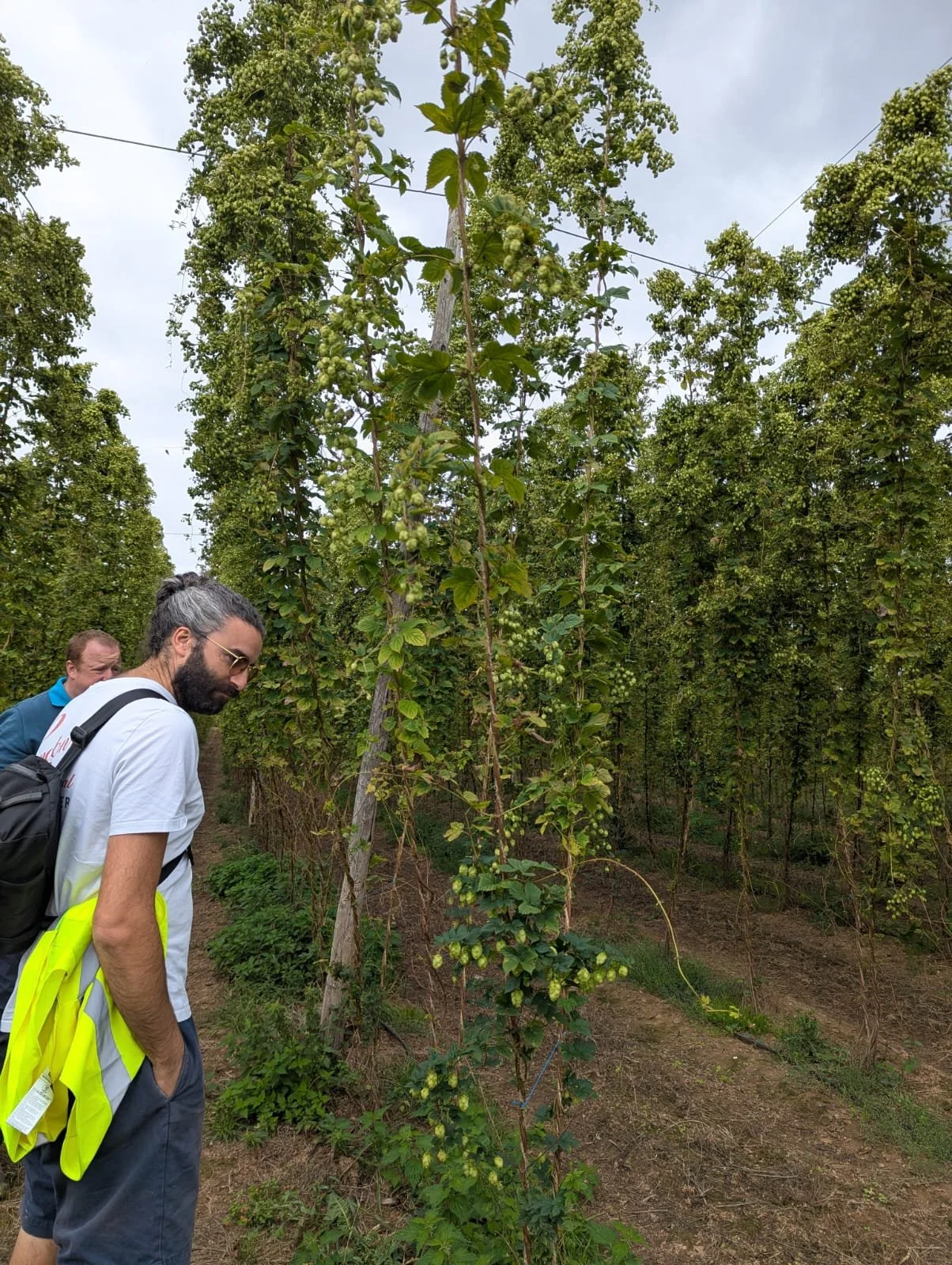
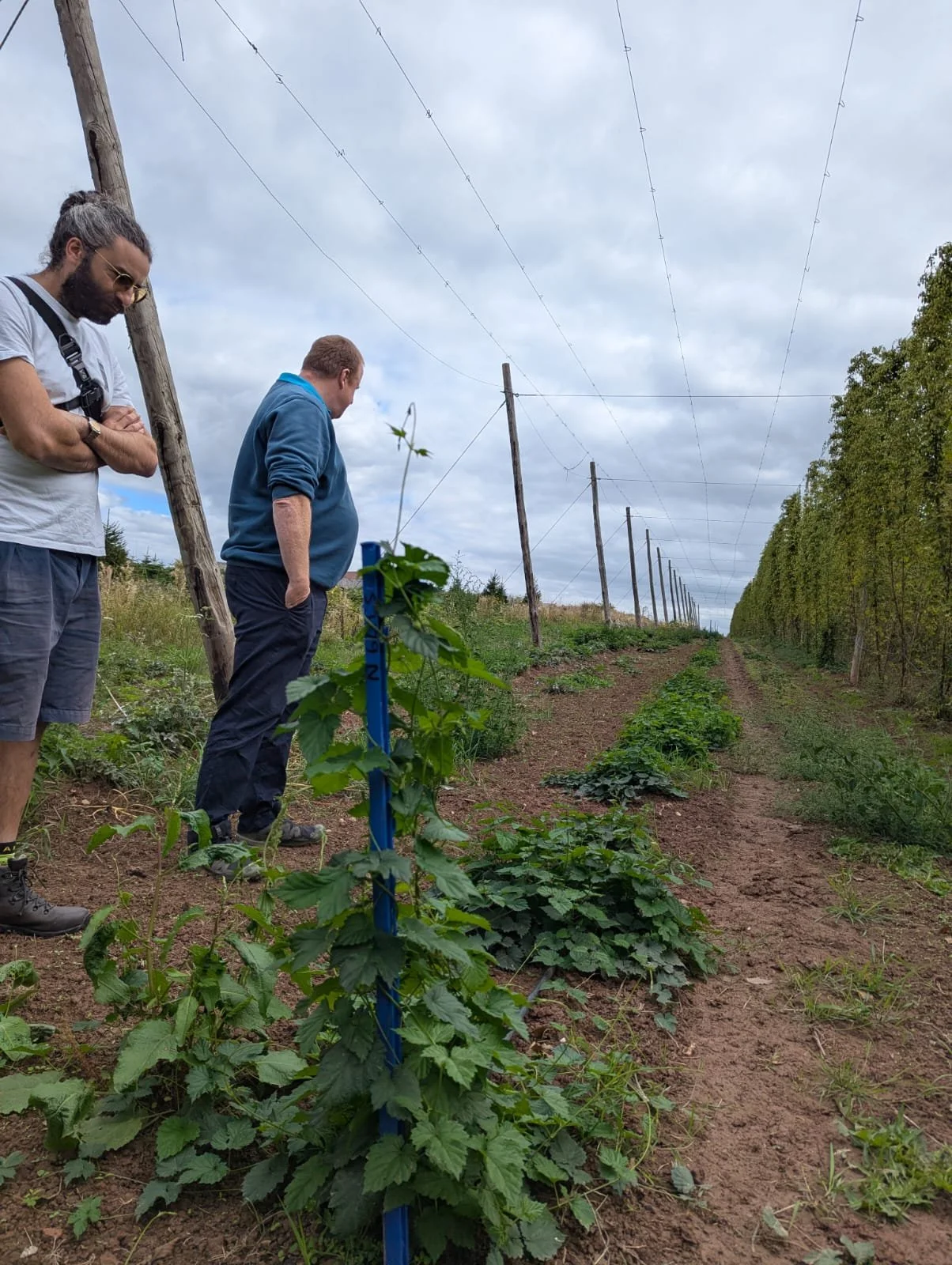
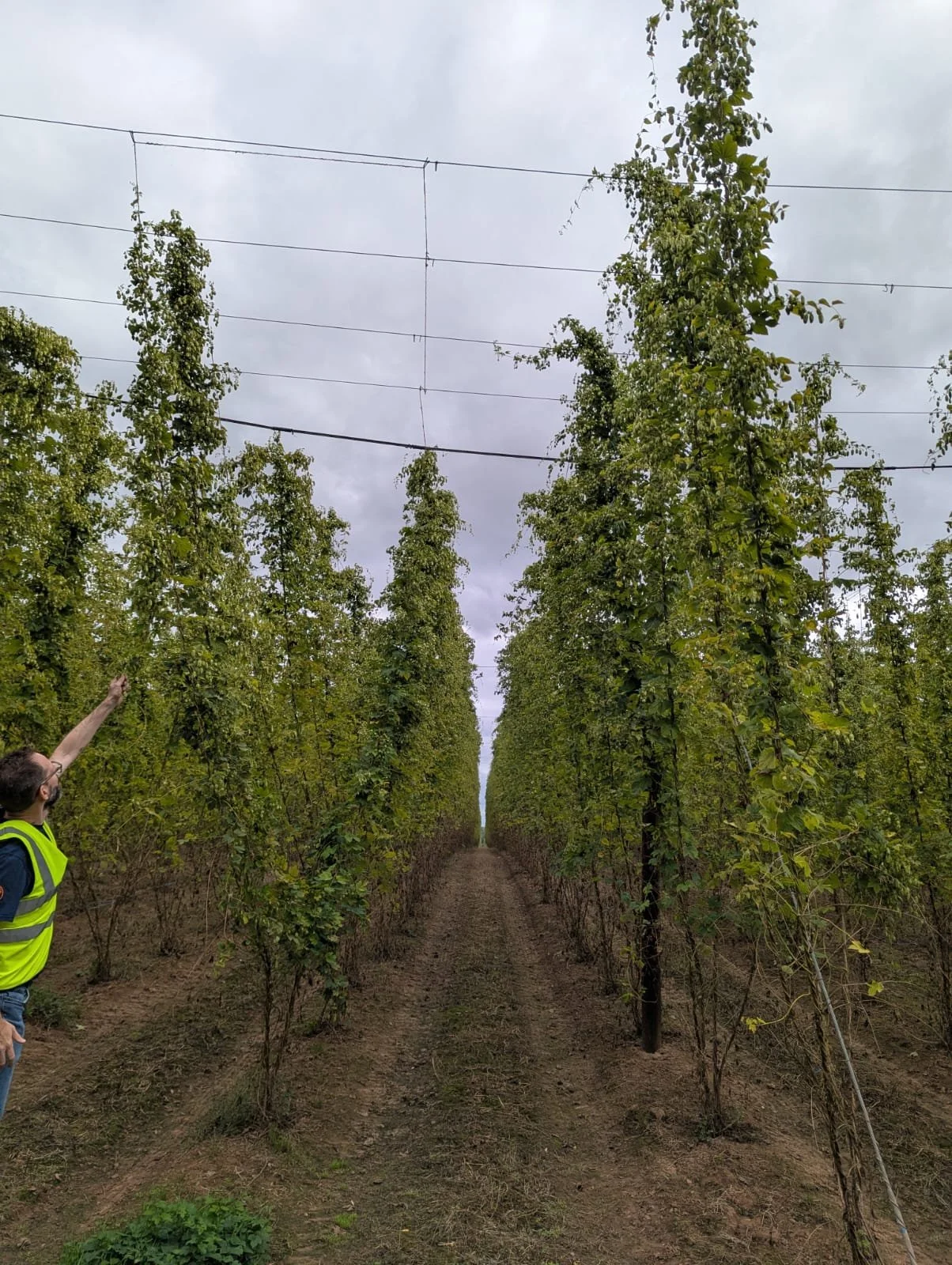
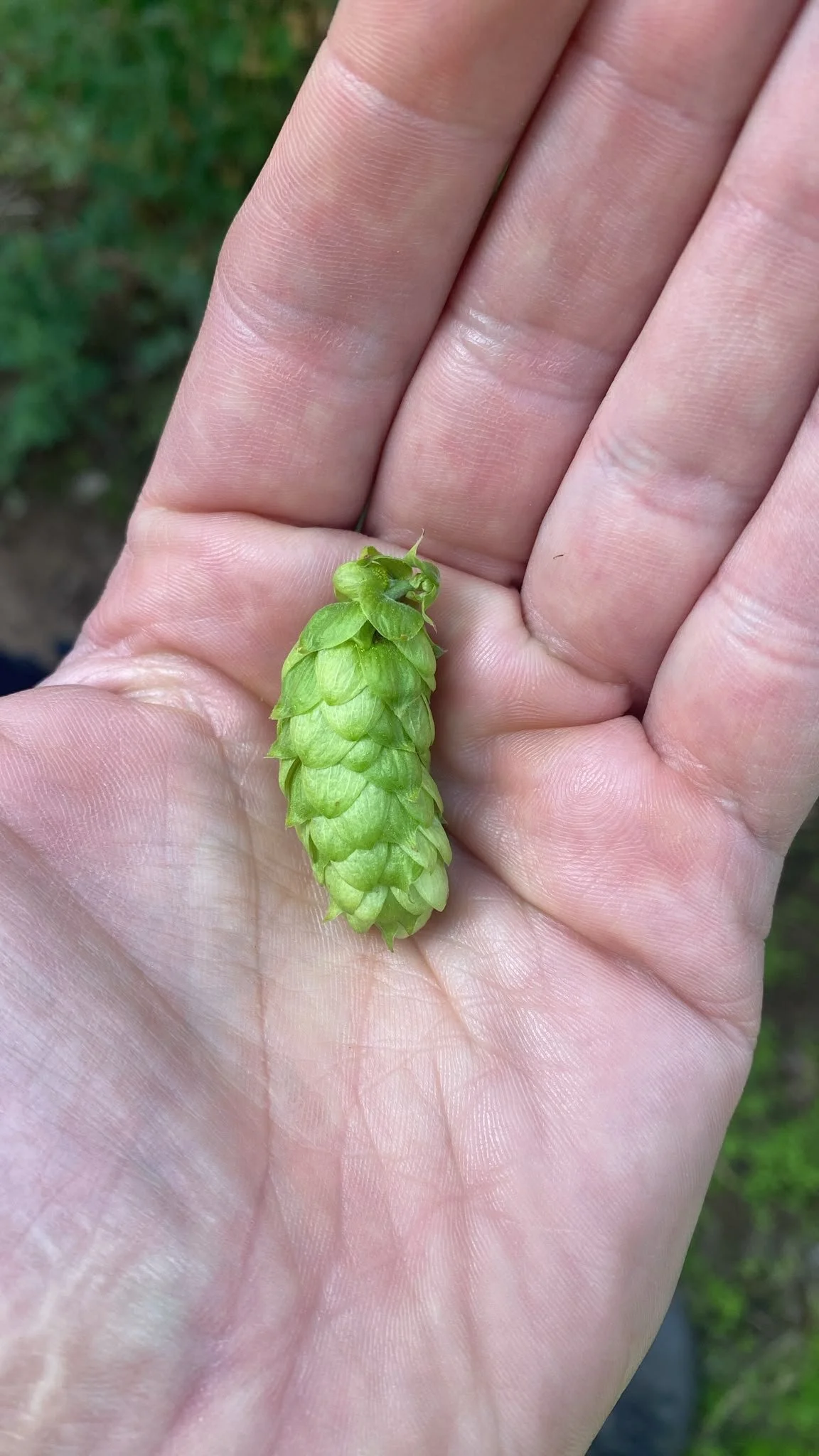
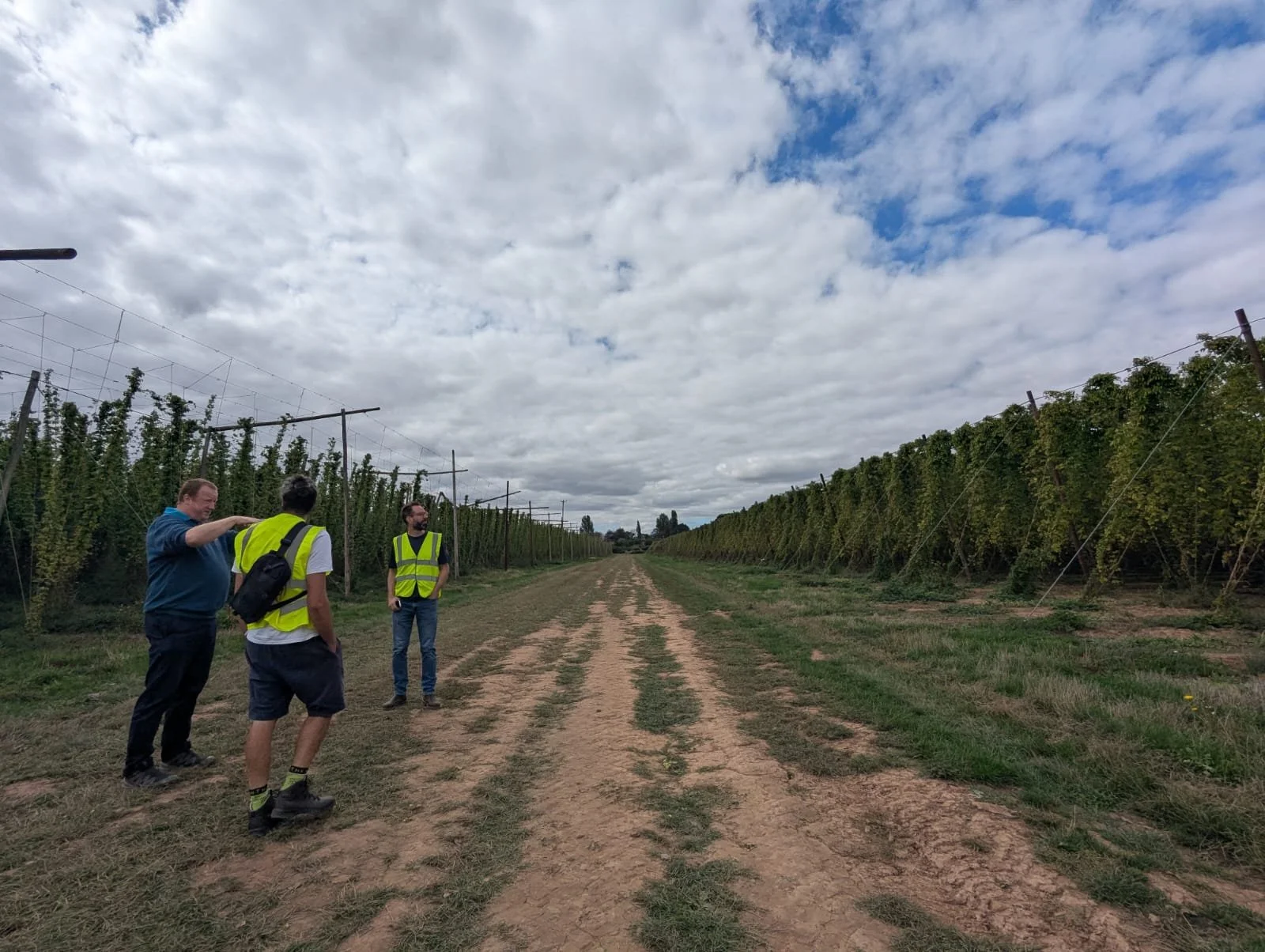
Will Rogers (Group Technical Director and overseer of the Charles Faram Hop Development Programme) was kind enough to take us on the tour of the farms, along with our rep and longtime brewery friend Jon Stringer. We went to a couple of the farms from Hawkins Farming LTD and a couple of farms from Tom Probert. Both were incredible and very different at the same time. Seeing the acreage of Hersbrucker being planted at the Hawkins’ farm was fairly breathtaking. The same goes for the Willamette at Tom Probert’s farm. Seeing these international hops being grown on home soil was pretty cool. We were even lucky enough to walk down a row and rub and sniff around 300 experimental varieties to see what’s going on in the programme and what the future could be for UK grown hops. They have thousands in this programme so we barely scratched the surface. Some were outstanding, some smelled great and were very oily but so sparse on the bine that not much could be done with it. Something else that was possibly the most mind blowing thing was seeing a row of UK grown Sorachi Ace. one of the most ‘marmite’ hops about but a very strong contender for brewery favourite. It actually smelled better than what I was expecting with it being grown here. One to look out for in the future I think.
A short Q&A with Will:
1) How long has Faram’s been involved in hops?
160 years. It started around 1865.
2) Who was Charles Faram?
Charles Faram started as a seed merchant, then started selling hop roots. Eventually he’d buy the hops back and sell them to brewers. He then decided to start his own Hop Merchants.
3) What do hops need to grow well? How does that vary across the globe in terms of conditions?
Rich fertile soils, climate dependent, more akin to horticulture. The plants are very needy and require a lot of attention. Hops only grow between 35 and 55 degrees of latitude in the northern hemisphere (Northern Italy to North Wales in Europe) and the same in the southern hemisphere. Lots of nitrogen.
4) Are some hops better for some applications than others?
Different hops are better for different applications. High alpha acid hops for bittering, lower for flavour/aroma. The higher the overall oil content, the more pronounced the characteristics.
5) How has the drought affected UK hop growing?
Significantly. Easier answer 60% of yield. Too hot for too long and the rain came too late. The plants weren’t able to get the food to the roots at the right time. The late rain prevented the hops from ripening as well on the bine as the plant went back into growth mode.
6) can they do anything to protect against that in the future?
Irrigation but at the right time and location, not too early as the plant won’t establish deep enough roots. Also from about an inch above the base to not alter the microclimate and introduce mildew. Using ‘bio stimulants’ with the baby plants, decreasing the time it takes to get to a yielding plant, within a year or two instead of three or more. Breeding with drought resistant and mildew resistant varieties.
7) What's the most exciting thing coming down the line from UK growers?
More and more new world style varieties, as punchy as the big American/Australian/Kiwi hops. Planting noble varieties here, as the climates shift the UK becomes a very ripe and fertile territory for hop production. Breeding with a wild very drought resistant variety found in the deserts of New Mexico, USA.
If you don’t work with Charles Faram it is always worth getting in touch and see what they can do for you or even join one of the annual Hop Walks that they organise.
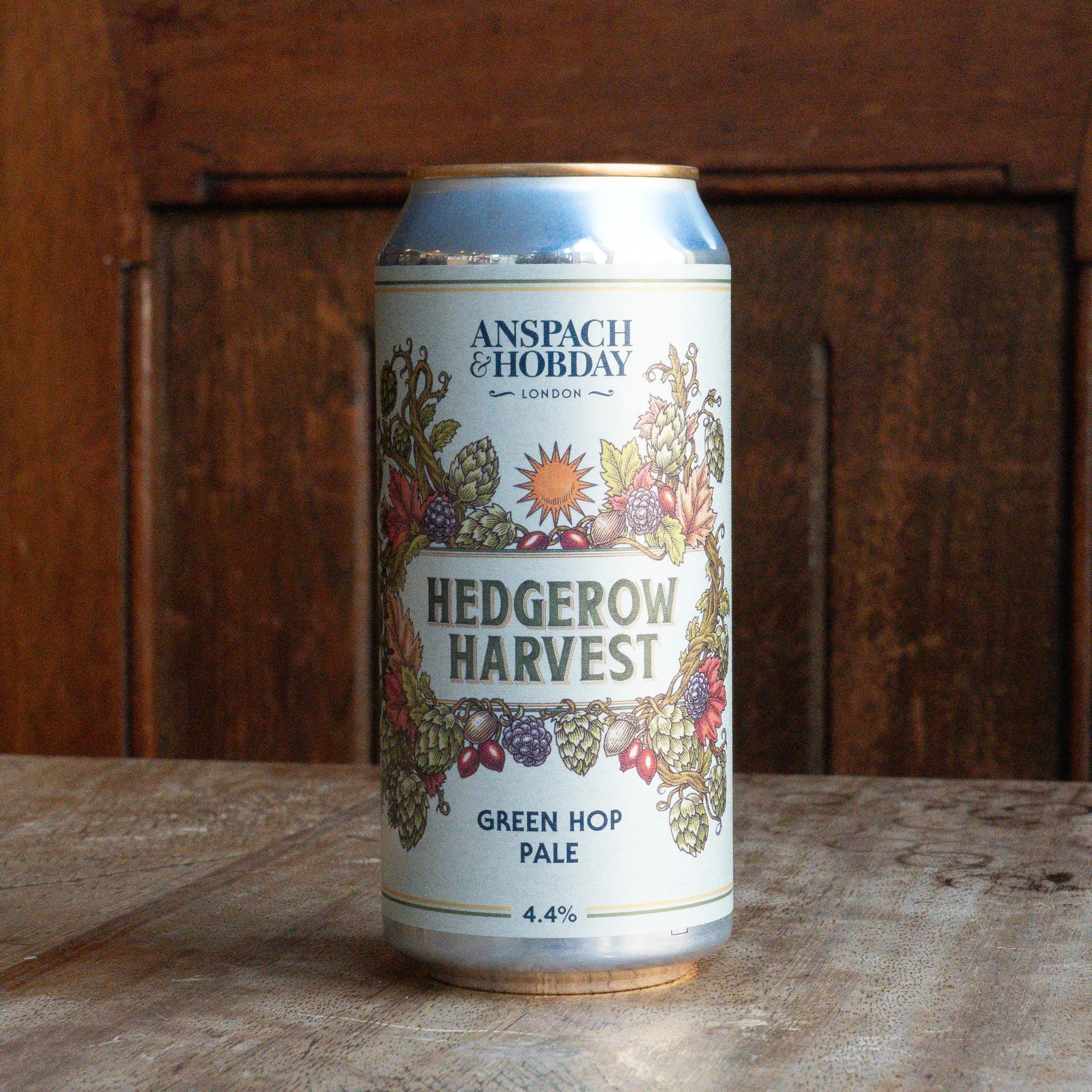
Hedgerow Harvest
it's that time of the year again! Our Green Hop Pale is back, brewed with fresh hops from Hukins Hops, Tenterden. Brewer and Co-Founder Paul went to visit the farm, and obtain fresh Challenger hops for the Harvest Brew! He filmed his adventures, take a look at the video here
A Green Hopped English Pale Ale, brewed with freshly picked Challenger hops grown by Hukins Hops, Tenterden, Kent. Notes of aromatic cedarwood, dried apricot, wild blackberry and orchard fruit combine to form a classically English-Hopped aroma. A touch of Crystal Malt and Invert sugar add a touch of sweetness which is balanced by a satisfyingly bitter finish. A truly one-off expression of a classic English hop.
ABV 4.4% / 440ml can
Hops Admiral / Challenger Fresh Hop
Malts Clear Choice, Flaked Oats, Malted Oats, Crystal, Chit